


Distillery A Kit
Distillery A Kit
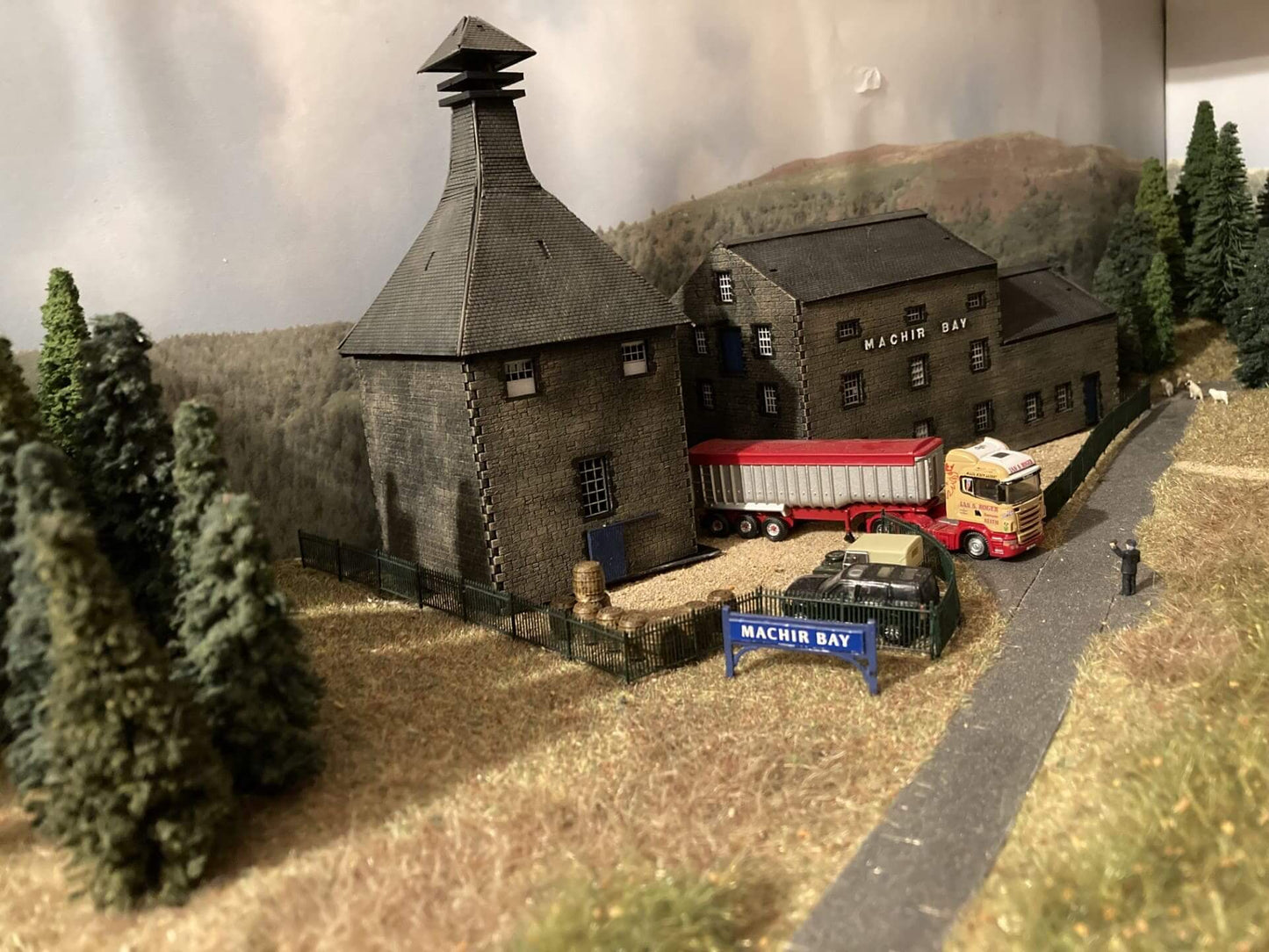
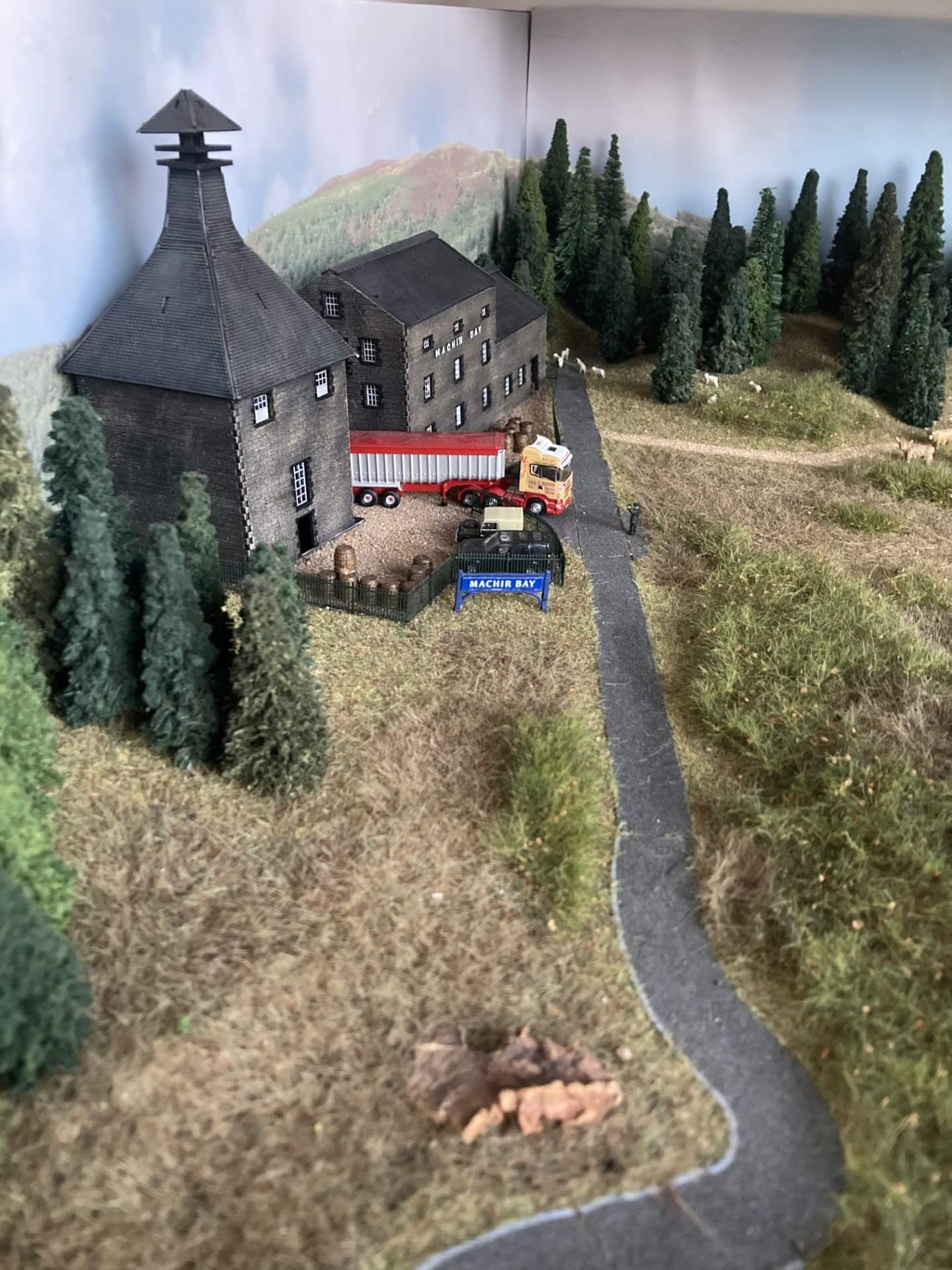
Scottish Whisky distilleries are found across Scotland, the buildings becoming widespread after the excise act of 1823. Every building was different. However, the renowned Elgin based architect Charles Doig had a massive influence on the design of many of the iconic Whisky buildings. He is immortalised by the “Cupola” style Doig Ventilators on the kilns used (originally) to malt barley. The cupola kilns are seen throughout Speyside and the efficiency of the design led to their use across Scotland.
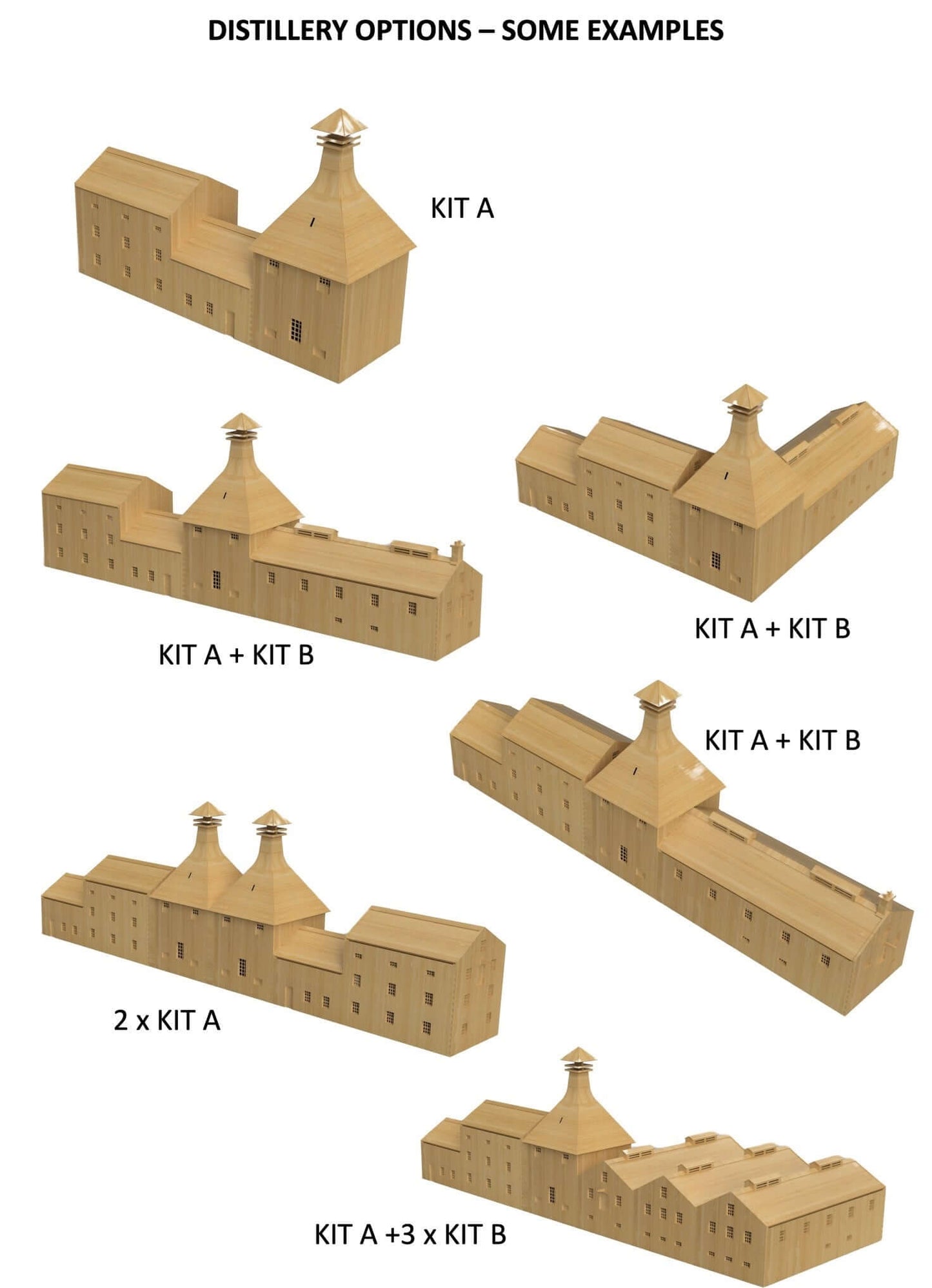
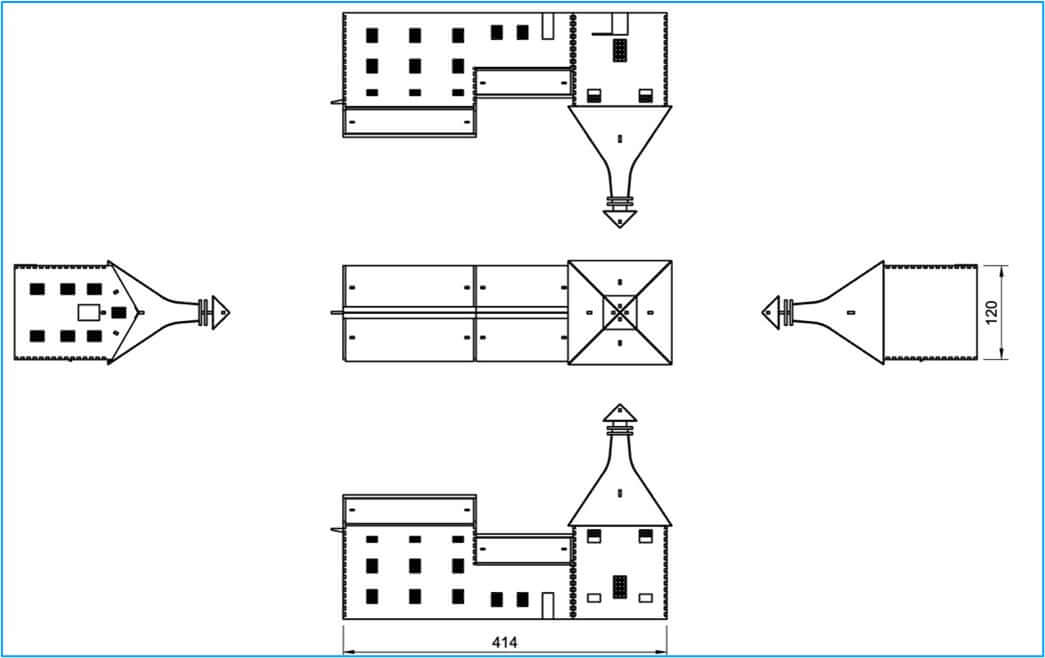
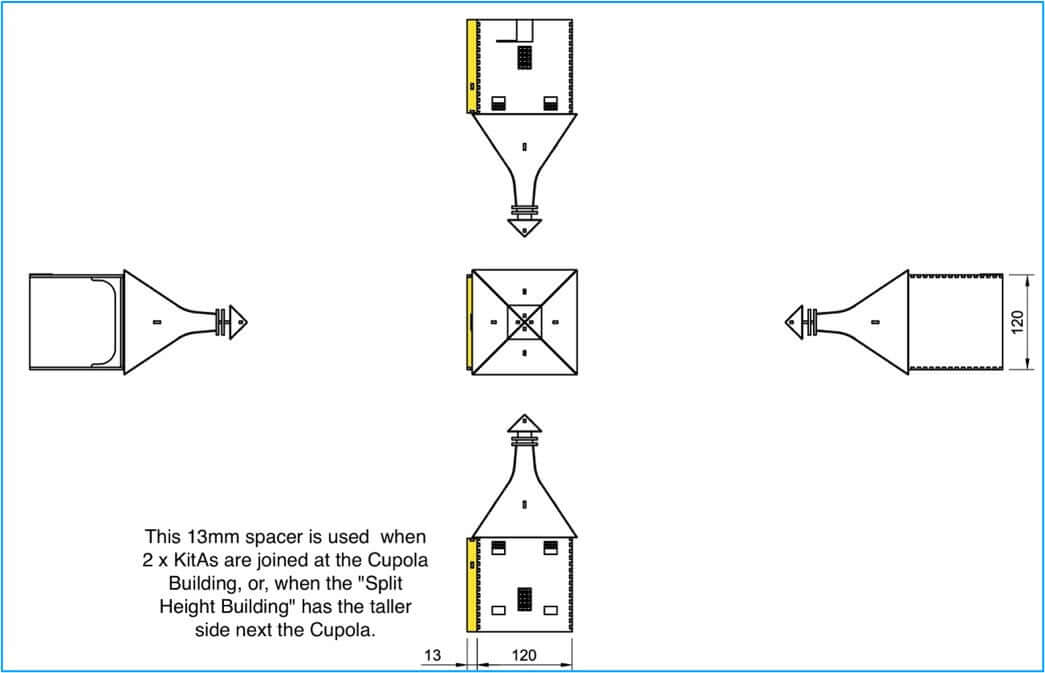
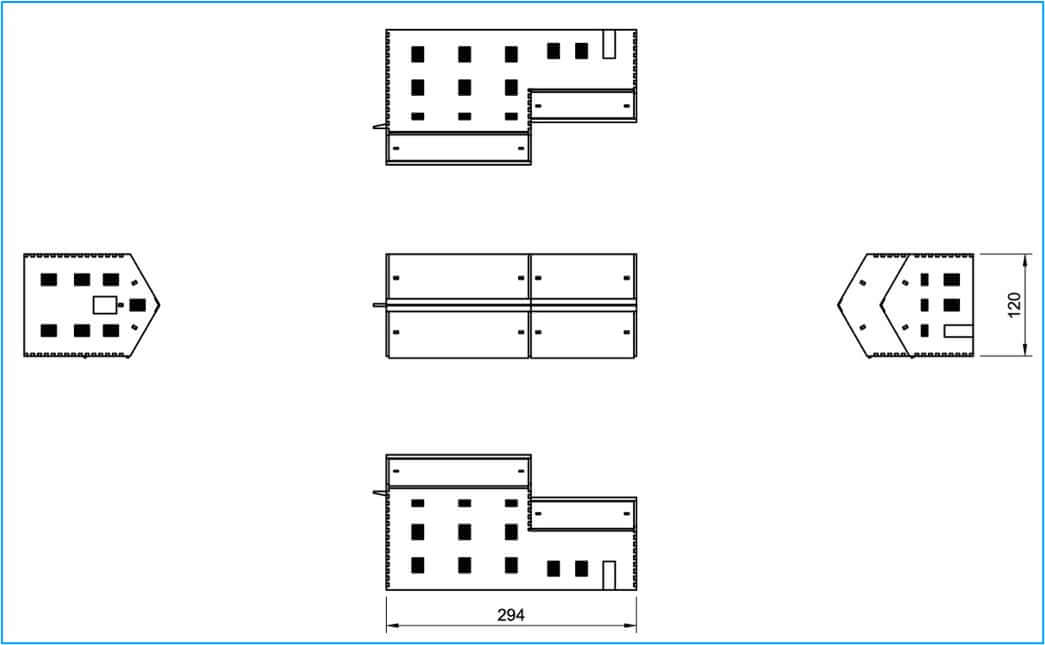
This Distillery Kits (A and B) attempt to capture the essence of Doig’s distillery designs – without being based on a specific distillery. Each of the buildings can be orientated and butted together to suit the modellers layout, adding additional Kits (A and B) to deliver the landscape that most closely mirrors their vision for the model. (Refer to the drawings and “options” on the next 2 pages of these instructions).
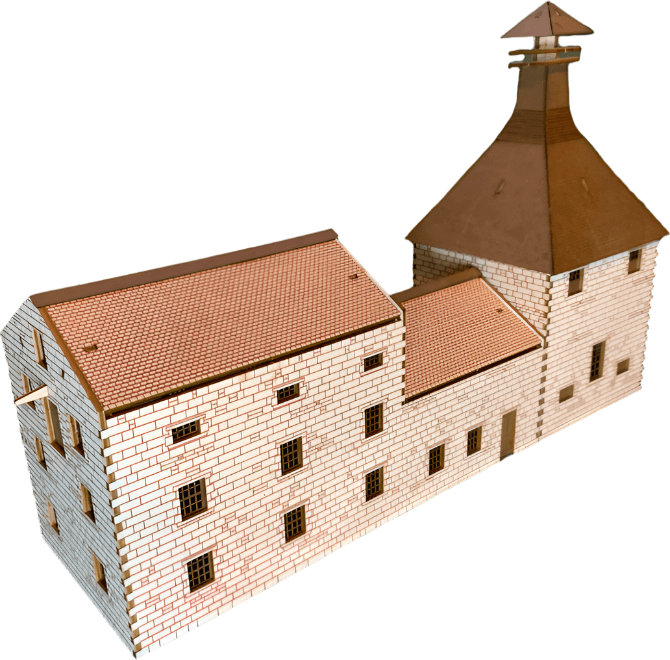
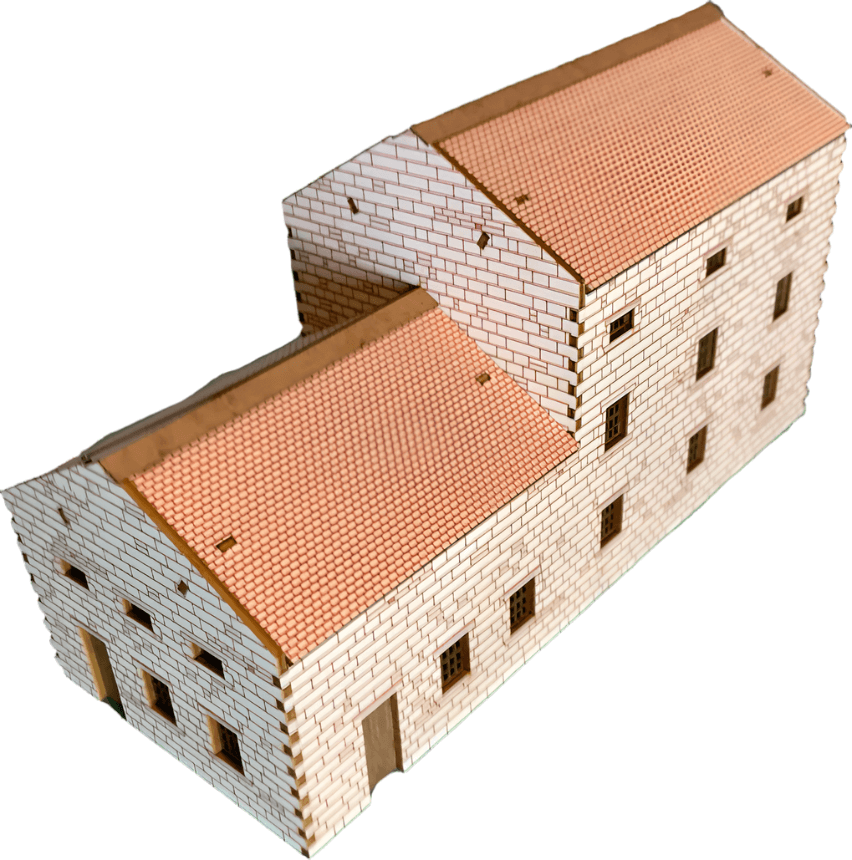
This bespoke Distillery Kit A for OO is in 5 x A4 3mm plywood sheets (2 x 0.8m ply sheets) has been designed in 1/76 scale to represent these iconic Charles Doig buildings.
The base size of this model when assembled is approx Pegoda base is 120 x 120 mm, distillery building 295 x 120 (to help with layout designs).
The building requires glue. Choose a glue that allows at least a minute before setting to allow adjustments to be made during the build. Always test the build before using glue.
For finishing, we recommend first priming the surface, then painting with any acrylic or model paint of your choice. The material is etched, so any engraved detail such as brickwork or roof tiles will be visible after painting.
All TT:120 gauge kits are scaled to 66% of the size of the original OO gauge model. The mathematically correct conversion from OO to TT:120 is approximately 63.33%, meaning that our TT:120 models are intentionally slightly oversized.
Scaling to N gauge works well and requires no additional modifications due to the material thickness. Some parts will be very fine, so take care when removing them from the frame. If some window pieces are particularly fine, they can be reinforced by soaking them in glue before assembly.
When scaling to O gauge, some manual modifications may be required during assembly. This is due to the increased material thickness required when scaling from the 3 mm plywood used for OO gauge. At true O gauge scale, the equivalent material thickness would be approximately 5.25 mm. As this thickness of plywood is not readily available, we use the closest available thickness, 4 mm plywood.
Couldn't load pickup availability


'%3E%3Cpath fill='%235A31F4' d='M53.413.209H4.321A4.063 4.063 0 00.258 4.272v28.523a4.063 4.063 0 004.063 4.063h49.092a4.063 4.063 0 004.063-4.063V4.272A4.063 4.063 0 0053.413.209z'/%3E%3Cpath fill='%23fff' d='M32.678 14.872c0 2.663-1.867 4.564-4.476 4.564h-2.458a.206.206 0 00-.206.207v3.5a.207.207 0 01-.206.207h-1.72a.208.208 0 01-.191-.128.205.205 0 01-.016-.078v-12.63a.206.206 0 01.206-.207h4.602c2.598-.003 4.465 1.898 4.465 4.565zm-2.145 0c0-1.531-1.044-2.65-2.46-2.65h-2.329a.206.206 0 00-.206.207v4.874a.206.206 0 00.206.206h2.329c1.416.01 2.46-1.11 2.46-2.637zM33.188 20.927a2.453 2.453 0 011.026-2.104c.671-.505 1.72-.766 3.26-.82l1.64-.058v-.484c0-.97-.65-1.38-1.694-1.38s-1.706.37-1.858.975a.2.2 0 01-.198.144h-1.62a.203.203 0 01-.206-.235c.24-1.434 1.433-2.524 3.956-2.524 2.684 0 3.653 1.25 3.653 3.636v5.066a.209.209 0 01-.21.207h-1.633a.209.209 0 01-.146-.06.206.206 0 01-.06-.146v-.379a.155.155 0 00-.268-.109c-.49.533-1.281.918-2.548.918-1.864 0-3.094-.97-3.094-2.647zm5.926-1.098v-.393l-2.124.112c-1.119.057-1.77.522-1.77 1.305 0 .708.597 1.1 1.64 1.1 1.417 0 2.254-.765 2.254-2.124zM42.787 27.178V25.71a.21.21 0 01.25-.204c.25.047.505.071.76.072a1.961 1.961 0 001.975-1.4l.106-.338a.218.218 0 000-.14l-3.403-8.74a.21.21 0 01.194-.286h1.65a.21.21 0 01.194.135l2.311 6.164a.21.21 0 00.396 0l2.007-6.147a.21.21 0 01.2-.144h1.707a.212.212 0 01.197.287l-3.64 9.706c-.838 2.256-2.275 2.833-3.857 2.833-.3.008-.6-.028-.89-.107a.212.212 0 01-.157-.223zM12.352 9.579a8.475 8.475 0 00-5.844 2.28.37.37 0 00-.046.495l.981 1.34a.375.375 0 00.573.045 6.063 6.063 0 014.344-1.775c3.364 0 5.121 2.532 5.121 5.032 0 2.718-1.846 4.63-4.499 4.668-2.05 0-3.595-1.359-3.595-3.154a3.065 3.065 0 011.133-2.365.37.37 0 00.051-.516L9.54 14.327a.376.376 0 00-.536-.055 5.448 5.448 0 00-2.03 4.238c0 3.09 2.626 5.514 5.99 5.534h.045c3.994-.052 6.882-3.01 6.882-7.053 0-3.59-2.644-7.412-7.538-7.412z'/%3E%3C/g%3E%3Cdefs%3E%3CclipPath id='clip0'%3E%3Cpath fill='%23fff' d='M0 0h57.699v37H0z'/%3E%3C/clipPath%3E%3C/defs%3E%3C/svg%3E)